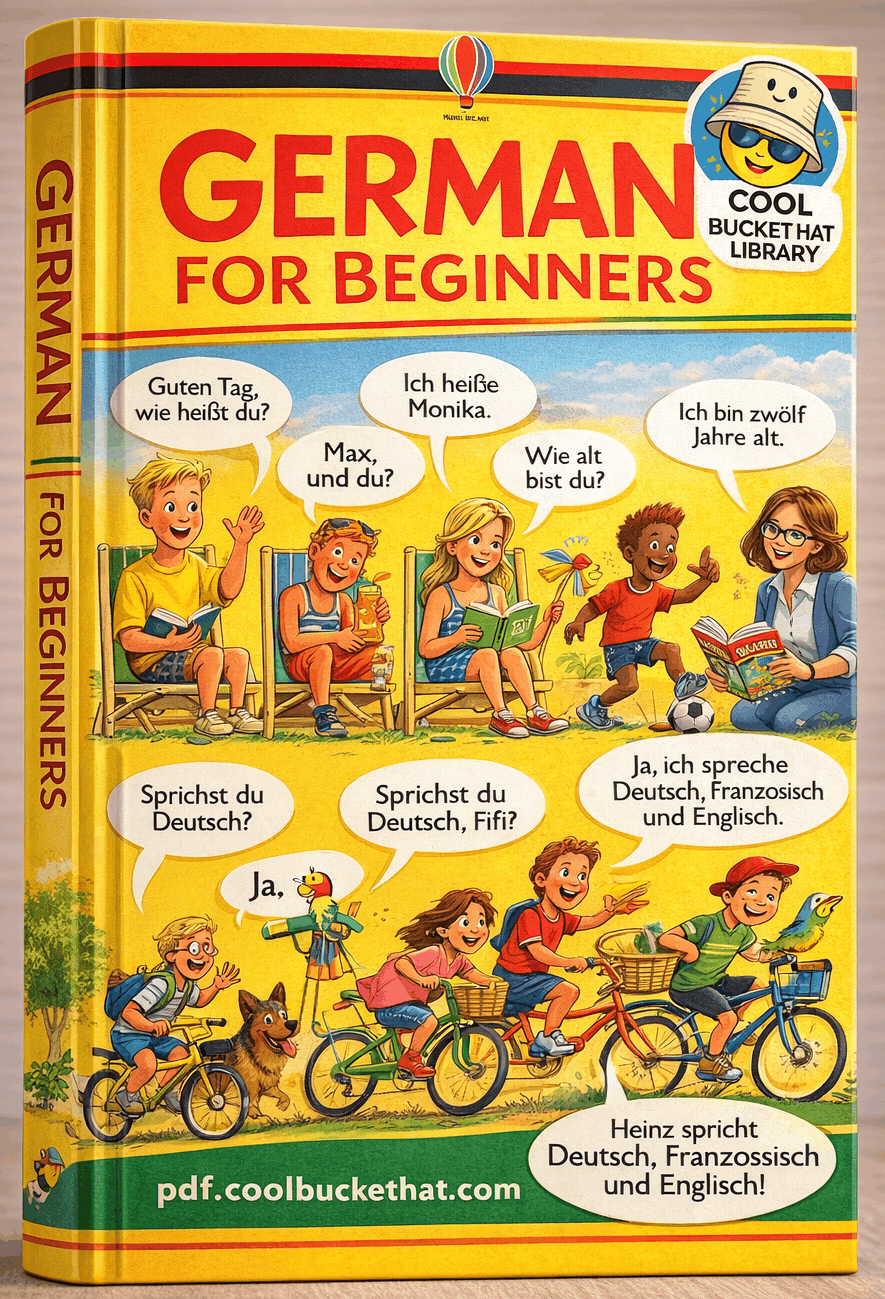
German for Beginners Book – Complete Learning Guide
German for Beginners Book is one of the best starting points for anyone who wants to learn German from scratch. For absolute beginners, German can seem intimidating with its cases, genders, and sentence structures. But with a well-structured beginner book, learning becomes clear, manageable, and even fun.
In this guide, you’ll learn what a good beginner German book should include, how to use it effectively, and what results you can expect — all explained in an easy-to-understand way.
Why a Beginner Book Is So Important
A German for Beginners Book does more than list vocabulary and grammar rules. It provides:
📌 A clear roadmap from simple to complex topics
📌 Examples that show how sentences are built
📌 Exercises that reinforce what you learn
📌 Real-life phrases for everyday use
Instead of jumping around randomly, a good beginner book takes you step by step, building confidence as you go.
What You Learn First in a Beginner Book (A1 Level)
Most German beginners start with the basics — the foundations that you must understand before progressing.
1. Alphabet & Pronunciation
Before you start speaking, you need to know how letters and sounds work.
You’ll learn:
This helps you pronounce words correctly, which is essential for listening and speaking.
2. Greetings & Introductions
These first lessons help you say basic phrases:
✔ Hallo! — Hello!
✔ Guten Morgen! — Good morning!
✔ Wie heißt du? — What is your name?
✔ Ich heiße Anna. — My name is Anna.
Simple conversations are the first step to real communication.
3. Basic Vocabulary
A beginner book introduces essential words you’ll use every day:
📍 Numbers
📍 Days of the week
📍 Family members
📍 Colors
📍 Everyday objects
📍 Food and drinks
Having core vocabulary boosts confidence and helps you start speaking fast.
4. Simple Grammar
Grammar is introduced gradually with clear explanations and examples:
Personal Pronouns
Present Tense Verbs
Articles and Gender
Example:
Der Hund ist groß.
Die Frau ist freundlich.
5. Sentence Structure
German word order might seem unfamiliar at first. Beginner books explain:
✔ Verb in position 2 (main clause)
✔ Simple questions
✔ Yes/No questions
✔ W-questions (Wer? Wo? Was?)
Example:
Heute lerne ich Deutsch.
Wo wohnst du?
Moving into Everyday Conversations
Once the basics are learned, the book usually introduces common situations, such as:
Daily Life
✔ Ich gehe einkaufen. — I’m going shopping.
✔ Ich arbeite jeden Tag. — I work every day.
At a Café or Restaurant
✔ Die Speisekarte, bitte. — The menu, please.
✔ Ich nehme einen Kaffee. — I’ll have a coffee.
Asking for Directions
✔ Wo ist der Bahnhof? — Where is the train station?
✔ Wie komme ich zum Hotel? — How do I get to the hotel?
These practical phrases give you confidence in real situations.
Core Grammar You’ll Meet in a Beginner Book
A beginner German book covers:
✔ Cases (Nominative & Accusative)
Example:
Ich sehe den Mann. (Akkusativ)
✔ Modal Verbs
Example:
Ich kann Deutsch sprechen.
✔ Perfect Tense (Simple Past)
Example:
Ich habe gelernt.
All of these are introduced with plenty of practice.
Writing and Listening Practice
A good German beginner book doesn’t just teach you rules — it lets you use them.
✔ Short reading texts
✔ Listening exercises
✔ Simple dialogs
✔ Questions with practice answers
✔ Mini writing tasks
Practice strengthens your skills faster than memorizing rules alone.
How to Use Your Beginner Book Effectively
To make the most of a German beginner book, follow these tips:
1. Study a Little Every Day
Short daily sessions (15–30 minutes) beat long, irregular study sessions.
2. Speak Aloud
You can only get comfortable speaking if you practice speaking.
3. Repeat Old Lessons
Language learning is repetition — don’t skip review!
4. Use Flashcards for Vocabulary
Flashcards help retention and recall.
5. Practice with a Partner
Conversations help you apply what you learn.
Suggested 8-Week Study Plan
| Week | Focus |
|---|
| 1–2 | Alphabet, greetings, pronunciation |
| 3–4 | Present tense, vocabulary, sentences |
| 5–6 | Everyday dialogues, questions, listening |
| 7–8 | Perfect tense, modal verbs, real conversations |
This plan helps you stay organized and motivated.
Benefits of a Beginner German Book
✔ Understand basic German quickly
✔ Begin speaking from day one
✔ Build vocabulary that matters
✔ Learn grammar naturally and clearly
✔ Gain confidence for real conversations
A beginner book makes German learning structured — and fun.
Common Beginner Mistakes to Avoid
✔ Waiting too long to speak
✔ Skipping pronunciation practice
✔ Only memorizing vocabulary lists
✔ Ignoring review sessions
Avoid these by staying consistent and practicing actively.
Final Thoughts
German for Beginners Book is your first step toward becoming a confident German speaker. With the right approach — short daily practice, clear instruction, and regular speaking — German becomes accessible and rewarding.
Start with basics, build confidence, and steadily move toward more complex language use. With commitment and the right resource, you’ll find that German isn’t as difficult as it first seemed.
Viel Erfolg! 🇩🇪📘😊